Made by Hand, Ridden Hard: Inside America's Small-Batch Board Shops
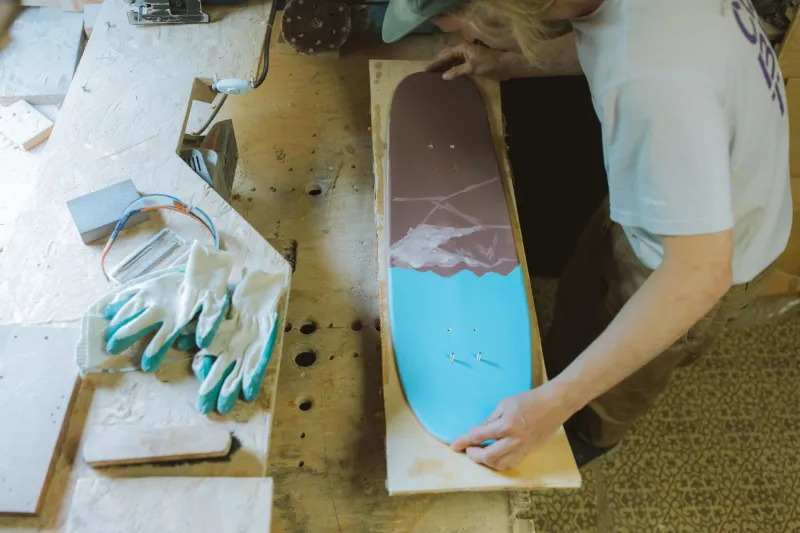
There's a moment in every small board shop when you realize the owner has stopped talking to you and started talking to the wood. It happens in a garage outside Burlington, Vermont, where a former furniture maker named Ray feeds strips of aspen and beech into a press that looks older than most of his customers. It happens again in a strip-mall workshop in Orange County, where the smell of maple dust hangs so thick you can taste it.
These are the last holdouts of the handmade board—the shapers and pressers keeping wood, fiberglass, and stubbornness alive in an era of offshore mass production. And if you want to understand why riders keep paying triple for a deck with a name nobody's heard of, you've got to stand in one of these rooms.
The Vermont Barn Press
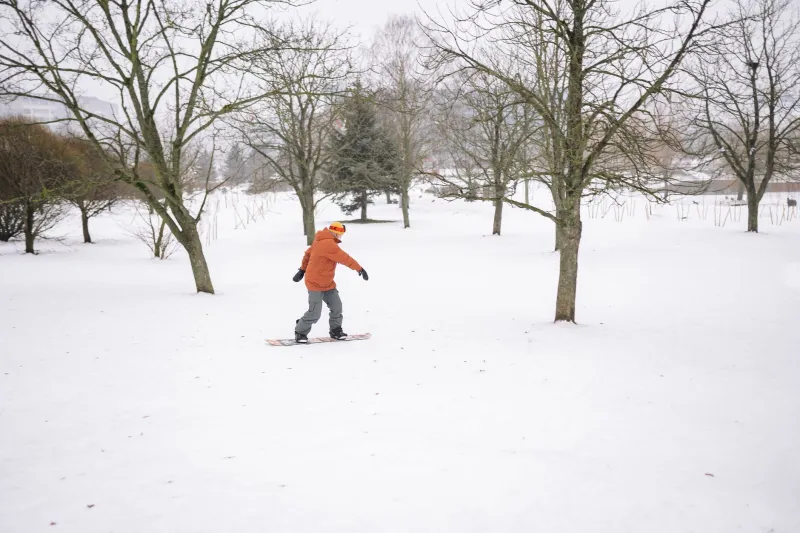
Ray's operation is exactly what you'd picture: a woodstove, a wall of hand tools, and a hydraulic press that groans like a haunted house. He builds snowboards in batches of ten, maybe fifteen, mostly for the East Coast crowd who ride ice and want a board with actual torsional snap.
"The big brands make a fine product," he says, sanding a base by hand. "But they make one fine product for four million people. I make this board for the kid who rides Stratton every Saturday and wants something nobody else is standing on."
His economics are brutal and simple. Materials for a single board run him real money—hardwood core, fiberglass, resin, base material, edges. A press cycle takes a day. Curing takes longer. When the math shakes out, he might clear a few hundred dollars a board, which is why he still does furniture restoration on the side. The boards aren't a business plan. They're a calling with invoices.
Maple Country, Southern California
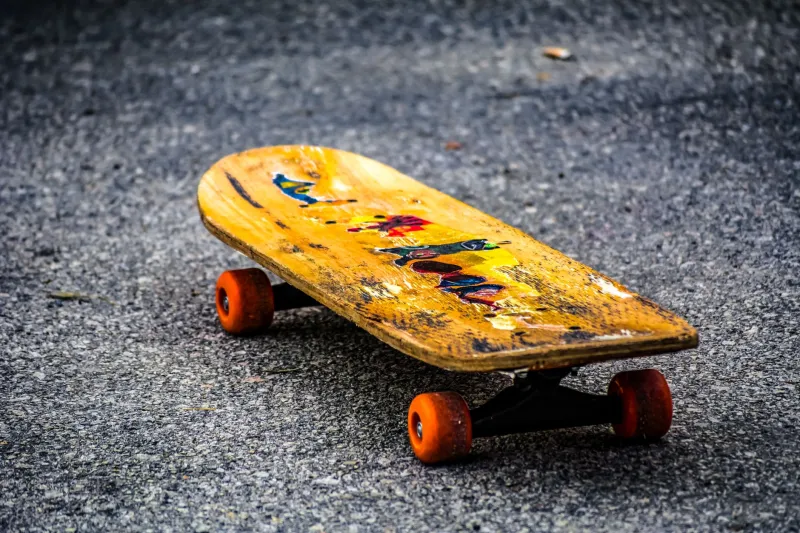
Drive 3,000 miles and you'll find a different version of the same story. Skate deck pressing in SoCal is a heritage industry—this is where modern maple construction was basically invented—and a handful of small shops still do it the old way: seven plies, glue, a mold, and time.
The shop I visited presses maybe 200 decks a month, which sounds like a lot until you learn a single major brand ships that many before lunch. But the owner isn't trying to compete on volume. His customers are skateshops and individual riders who want a deck pressed to a specific mold—something a little wider, a little more wheelbase, a shape the big catalogs stopped making in 2011.
"Every deck that leaves here, I know the tree it came from," he told me, only half joking. "Try asking a big brand that question."
Why Riders Pay Up
The handmade premium is real—expect to pay two to three times what a mass-produced deck costs. So why does anyone?
Durability that shows up in month six. Small-batch boards often use better glue lines and hand-selected cores. Riders who've made the switch consistently report decks that hold pop and camber longer, which changes the cost-per-season math considerably.
Shapes you literally cannot buy. Big brands serve the median. Local builders serve the outlier—the tall rider, the weird stance, the one guy who wants a 9-inch powder nose on a board he can still ollie.
A relationship, not a transaction. When your deck cracks, you email the person who made it. When you want a custom graphic, you talk to the artist down the street. That's not nostalgia; that's a supply chain you can look in the eye.
Weathering the Big Brands
None of these builders are naive about the competition. The big players have marketing budgets that could buy Ray's entire barn, press included. What the small shops have is agility and authenticity—two things that can't be manufactured at scale.
Most survive through a mix of custom work, local shop partnerships, and a loyal base of riders who treat their deck like a piece of regional identity. A Vermont-built snowboard on a Killington lift line is a conversation starter. A hand-pressed deck at a California skatepark carries the same weight.
Where to Find Them
The good news: there's probably a builder within driving distance of you. Ask at your local shop—literally any local shop—because the owners all know each other. Hit a regional board festival or a handmade market. Search your state plus "custom snowboard" or "handmade skateboards" and prepare to go down a rabbit hole.
Buy one, ride it, and you'll understand the whole thing in about two runs. A board built by a person, for a person, in a place you can visit—that's not gear. That's membership.