Blacktop Believers: The Case for Letting Kids Ride the Schoolyard
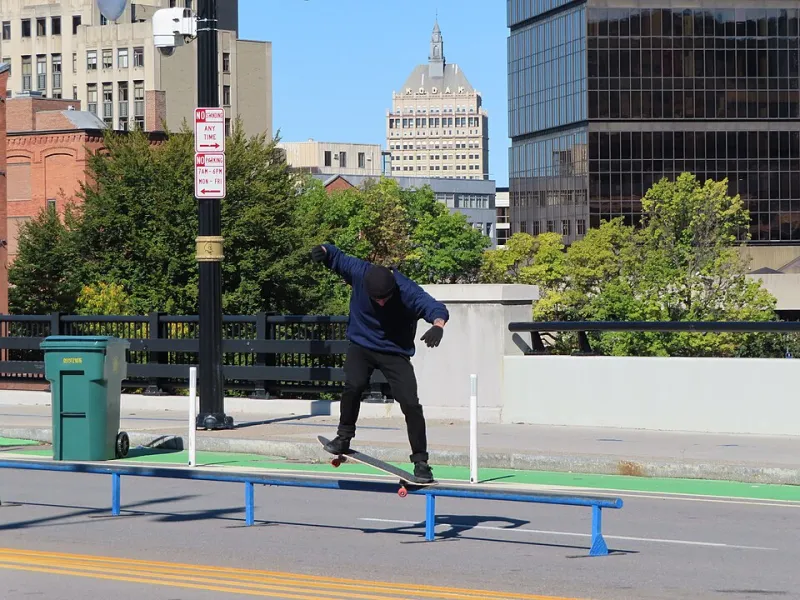
Photo: DanielPenfield, CC BY-SA 4.0, via Wikimedia Commons
Every skater in America has one. Not the $2 million plaza downtown, not the private park with the foam pit — the school. The cracked blacktop behind Jefferson Elementary with the flat bar that's been waxed by three generations of greasy palms. The four-stair with a landing that turns to soup every time it rains. That's the spot. That's always been the spot.
And here's the uncomfortable truth the skate industry doesn't love: the schoolyard is still doing more for American skateboarding than half the purpose-built parks in the country.
The Most Consistent Coach in Town
Think about what a school blacktop offers. Dead-flat ground, poured by contractors who had to pass inspection. A flat bar at exactly the height a beginner needs. A ledge here, a manual pad there, banks where the sidewalk meets the grass. It's a skatepark designed by accident, and the accidents were good ones.
"I learned every trick I know on that bar," says Marcus, 24, who grew up skating the middle school in his Ohio town. "Sixteen years of kids hitting that thing. You can see the grind marks. It's like a museum."
That's the thing about school spots — they're load-bearing for the whole local scene. The park might close at dusk or attract the wrong crowd, but the schoolyard on a Sunday morning in July? Empty, quiet, all yours.
The Summer Lockout Problem
So why, every June, do the chains come out?
Districts fence off blacktops citing liability, vandalism, and — the all-purpose excuse — "safety concerns." Never mind that a kid with a skateboard is not a hazard category. Never mind that the fence costs thousands to install and maintain, while the alternative costs nothing. The logic runs backwards: we'll spend money to keep people away from a public asset built with public money.
The vandalism argument deserves an honest hearing, because it's the only one with any meat on it. Yes, some wax ends up where it shouldn't. Yes, a rail gets tagged occasionally. But study after study of open-school policies — and cities from Oakland to Burlington have experimented with them — shows that active, legitimate use reduces vandalism. Eyes on the space. People who treat a spot like theirs protect it. The empty, fenced lot is what actually gets wrecked.
What Open Access Actually Costs
Here's the math that should end the argument: zero dollars.
Opening a blacktop to skaters on weekends and over summer requires a policy change and a sign. That's it. Compare that to a single new skatepark — which, don't get us wrong, we'd love in every zip code — running from $300k for a small neighborhood spot to well over a million for anything ambitious. Most towns can't get that bond measure passed. Every town can unlock a gate.
And the payoff compounds. Kids who learn to push on a schoolyard become the teenagers who show up to city council meetings asking for a real park. Kill the blacktop scene and you're killing the pipeline.
Keep It Respectful, Keep It Open
Look, this only works if riders hold up their end. The deal is simple: pack out your trash, don't wax the lunch tables, and if a coach or custodian asks you to bounce during school hours, you bounce. Every skater who treats a spot with respect is buying access for the next crew. Every one who doesn't is spending somebody else's money.
The schoolyard was never designed for us, but it's ours anyway — earned through a thousand slams on hot blacktop and a thousand more Sunday mornings to come. Districts should stop treating that as a problem to fence off and start treating it as the cheapest youth program they'll ever fund.
Chain-link is a terrible cathedral wall. Let people in.