Salt, Steel, and Seven-Ply: The Midwest Is Quietly Out-Shredding the Coasts
There's a joke that gets told in every skate shop between Chicago and Cleveland: the coasts have the culture, the Midwest has the parking lots. The people telling it are usually laughing while they re-grip a deck they've ridden through three winters. Because here's the thing — the joke stopped being true a while ago.
Built From What's Broken
The Midwest board scene was never handed anything. No perfect weather, no cement playgrounds designed by committees, no sponsor vans idling outside. What it did have was an endless supply of abandoned infrastructure — shuttered schools, empty mall lots, decommissioned rail yards — and a work ethic that treats a busted ledge as a puzzle, not a problem.
Detroit might be the clearest example. The city's skate community adopted its ruins decades ago, turning vacant industrial slabs into DIY plazas that rival anything purpose-built. Riders out here learned to read concrete the way surfers read water. Every crack, every patch of gravel, every sketchy run-off is cataloged in their heads.
Up in Duluth, it's a different beast entirely. Lake-effect snow buries the hills deep enough to ride from November into April, and the local crew treats Spirit Mountain's sidecountry like their personal backcountry. When the powder gets heavy, the same kids who were pushing around a church parking lot in July are slashing tree runs by February.
Straight From the Shop Counter
We called around to a few shops that anchor these scenes, and the story is remarkably consistent.
"People think nothing happens here," says a shop owner in Columbus who asked us to keep his store out of the piece — he says the tourists are already too much. "Meanwhile I can't keep decks in stock past October. Kids around here don't wait for perfect conditions. There's no such thing."
A Minneapolis buyer put it even blunter: "Coastal scenes have style. We have reps. You can't fake ten thousand pushes on ice-covered pavement."
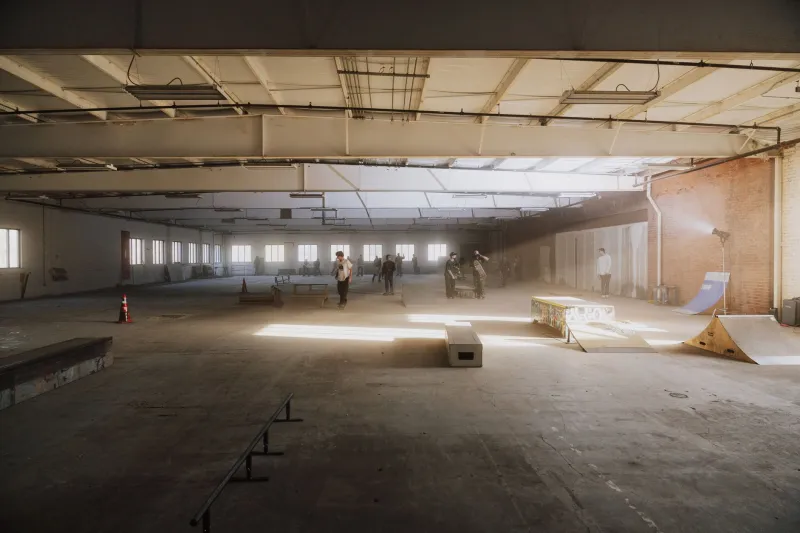
That repetition breeds a specific kind of creativity. When your window to skate outside is four months long and your snow season is defined by wind chill warnings, you get resourceful. Indoor parks carved out of old warehouses. Snowboarders building rope tows behind farmhouses. Spot hunts that read like urban archaeology.
The Hidden Hit List
We won't burn every spot — that's not how this works — but here's a taste of what's out there:
- The Rust Belt plazas (Detroit metro): Post-industrial ledges with wax history going back fifteen years. Bring a broom, show respect, leave it cleaner than you found it.
- Lakefront runs (Duluth): Short, steep, and dumped on constantly. Locals say the best turns happen the morning after the lake steam rolls in.
- Riverfront DIY (Cincinnati): A community-built spot that survived multiple teardown attempts because the crew kept rebuilding it faster than the city could tear it down.
- The Grain Belt garages (Twin Cities): Multi-level parking structures that turn into wind-blown powder laps when the campus empties out.
Why the Coasts Should Worry (a Little)
Style didn't disappear in the middle of the country — it just got quieter about it. The Midwest rider aesthetic is less about the fit and more about the follow-through. Less filming, more doing. And with board costs pushing coastal kids out of the sport entirely, there's a real argument that the future of American riding is being shaped in second-tier cities with first-tier winters.
So next time your flight connects through O'Hare, consider staying. The lots are ugly, the salt stains everything, and the style is unlike anywhere else on the map. That's not a bug. That's the whole point.