The Garage Fire Nobody Plans For: How to Actually Insure Your Board Quiver

Nobody buys a renters insurance policy because of their skateboard. That's the problem.
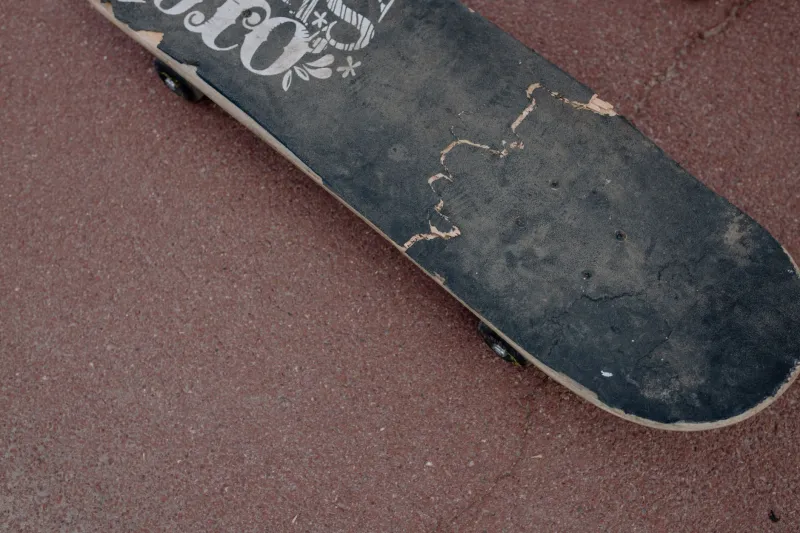
We'll drop $60 on a set of trucks without blinking, we'll argue about wheel durometers like it's a court case, and then we'll store twelve boards worth four grand stacked against a water heater that's been leaking since the Obama administration. If you think your quiver is covered under some vague assumption that "insurance exists," this is your wake-up call, delivered with love and a little bit of salt.
The Part Where I Tell You What You Already Suspect
Here's the deal: most standard renters and homeowners policies do cover your boards — technically. Personal property coverage doesn't care if you own a couch or a hand-shaped custom deck from a shop in Bend. But there are two catches that bite riders constantly.
First, deductibles. If your $600 setup gets jacked out of your trunk and your deductible is $1,000, congratulations: your insurance company owes you nothing but a firm handshake. Second, special limits. Some policies cap payouts on items stored in garages, sheds, or vehicles — exactly where boards live. Read your policy or you're just paying for a feeling of safety.
Scheduling: The Scariest-Sounding Cheapest Thing
The move experienced collectors use is called a "scheduled personal property" endorsement, sometimes a rider or floater. You list specific items, get them appraised or documented, and pay a small annual premium — often $15 to $30 per $1,000 of coverage, with zero deductible and theft coverage that doesn't require signs of forced entry. For a serious quiver, that's the cost of one pair of laces per year.
One claims adjuster I talked to — we'll call him Dave, because his name is Dave — put it plainly: "The people who get paid are the people who can prove what they owned. The people who don't are the ones saying 'trust me, I had a limited edition Powell.'"
Document Like a Paranoid Person
You don't need a lawyer. You need your phone.
- Photograph every deck, top and bottom, plus the trucks, wheels, and any custom work
- Shoot close-ups of serial numbers, shop stickers, and signatures
- Save receipts and order confirmations in a folder — email works, cloud storage is better
- Keep that folder somewhere that is NOT your garage, because if the garage burns, your evidence burns with it
One rider in Colorado lost nine boards, a wall of vintage completes, and his whole tool setup when a wildfire took his storage unit. His payout? Whatever the insurer felt like assigning to "miscellaneous sporting goods." The rider down the hall who had a spreadsheet and cloud photos got itemized replacement value. Same fire. Wildly different endings.
Engrave It, Mark It, Make It Hard to Sell
Stolen decks are hard to recover because they're anonymous. Fix that. Engrave or paint-pen your name or a driver's license number somewhere discreet — inside the wheelbase, under the trucks. A thief can't quickly flip a deck that screams "stolen" when a shop owner flips it over. Plenty of local shops keep an eye out for hot boards, but they can't identify what they don't know. Tell your local shop your boards exist. Seriously. It takes ten minutes and it's the cheapest recovery network you'll ever build.
The Divorce Clause (Yes, Really)
Here's the weird one nobody warns you about: if you split from a partner, collections get messy. If the boards were bought during the relationship, they can be treated like any other property — which means your quiver could theoretically end up in a settlement negotiation. Collectors who've been through it say the same thing: keep purchase records in your name, keep the collection documented as yours, and if things get serious, have the conversation early. It's less awkward than litigating over a 1994 Natas.
The Bottom Line
For the price of a couple burritos a year, you can go from "hope nothing happens" to "documented, scheduled, and replaceable." Riders who lost everything to theft, fire, or a bad breakup all say versions of the same thing: they always meant to get around to it.
Get around to it this week. Photograph the quiver, email yourself the receipts, call your insurer and ask two questions: "Is my collection covered away from home?" and "What's my deductible?" Then decide if you're actually protected or just hoping.
Because the garage fire doesn't care how good your kickflip is.