Level Five Is Open: Inside the Parking Garages That Became America's Strangest Skateparks
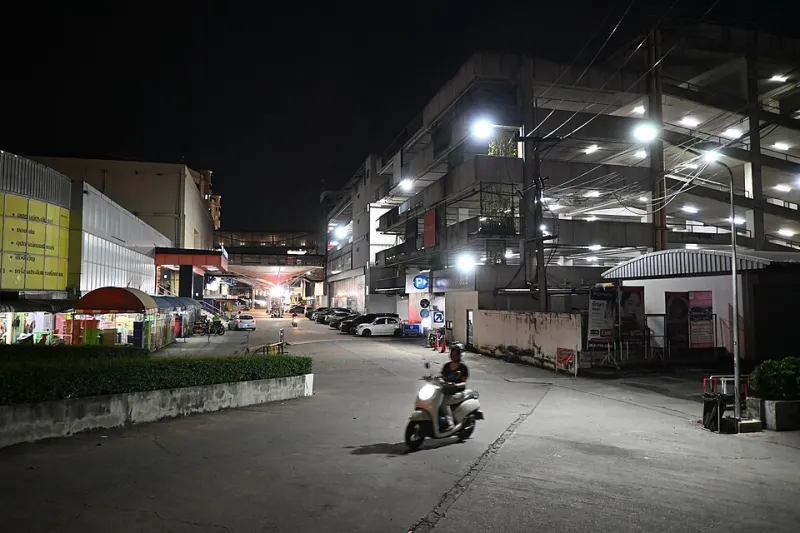
Photo: PattayaPatrol, CC BY-SA 4.0, via Wikimedia Commons
The garage on the corner of Fifth and Main hasn't hit 60% occupancy since the accounting firm upstairs went remote in 2021. By 7 p.m., the gates are down, the attendant's gone home, and levels three through six sit empty under buzzing fluorescents — 200,000 square feet of smooth concrete, banked ramps, and not a single person around to tell you no.
If you've never pushed through a parking structure at dusk with your board under your arm, you genuinely don't know what you're missing. It's the closest thing this country has to a private skatepark that nobody owns.
Why Garages Ride Better Than They Should
Parking structures are basically skateparks that got lost on the way to the build site. The driving ramps — those long spiraling lanes with the gentle grade — are perfect roll-ins. The curb cuts, the drainage slopes, the occasional lip where the slab changes elevation: it's all transition, all texture, all built before anyone thought about skate-stopping every third inch of ledgework.
And the concrete? Commercial-grade, poured thick, swept clean by nobody. Compare that to the average public park where the flat ground has been skate-stopped into swiss cheese and the quarter pipe's coping looks like it lost a fight with a hammer.
There's also the weather thing. A covered garage means you can skate through a thunderstorm in Houston or dodge a January freeze in Detroit. For riders in climates that kill street skating five months a year, a garage is the difference between a dead season and a productive one.
The Riders Who 'Claimed' Their Spots
Every mid-size city has at least one garage with a reputation. In Columbus, it's a structure near the arena district where a crew has been running Tuesday night sessions for three years. In Phoenix, riders time their laps around the valet shift change downtown. The rules of engagement are unwritten but remarkably consistent:
- Go late. After business hours, before the overnight patrol. You want the building empty, not abandoned.
- Leave it cleaner than the cars do. No wax shavings piled on the ledges, no trash, no tags. The fastest way to lose a garage is to make it look like a garage got skated.
- Know the attendant. Half the time, the guy in the booth is the whole security apparatus. Be cool, be brief, be gone by the time he says.
One rider we'll call Marcus — because his crew doesn't need their spot showing up in a search — put it plainly: "A garage session is a favor somebody's doing you whether they know it or not. You don't repay a favor by leaving a mess and a YouTube thumbnail."
The Property Manager's Dilemma
Here's the thing nobody talks about: the people who run these buildings often know. And plenty of them don't care.
A regional property manager for a commercial real estate group — who asked that we not name the company or the city — told us the math out loud. "After hours, my liability exposure from a skateboarder is basically the same as from a homeless guy sleeping in stairwell three. The difference is the skateboarder sweeps up his own dust. If nobody's getting hurt and nothing's getting broken, my insurance premium doesn't know the difference."
That's not an endorsement. That's a shrug. But in the post-pandemic office economy, an empty garage is a cost center, and a quiet crew of riders on level five is the least of anyone's problems. Some managers have gone further, quietly unlocking the pedestrian gate on weekends and looking the other way — a kind of handshake agreement nobody puts in writing.
Others aren't so chill. Skateboarding is technically trespassing in most private structures, and a rider who eats it on a ramp at 2 a.m. is a lawsuit with a broken wrist. That's the gray zone: technically illegal, socially tolerated, mutually beneficial, and completely undocumented. Every garage crew knows the deal could end tomorrow with a new padlock and a new sign.
Cities Are Starting to Notice
Now for the twist: some municipalities are exploring the idea of making garage sessions official.
The logic is simple. Public skateparks are overcrowded and expensive to build — a quality concrete park runs $50 to $100 per square foot, and a mid-size city can wait a decade between builds. Meanwhile, cities own parking structures that sit half-empty after 6 p.m. A sanctioned session — limited hours, signed waivers, maybe a permit system — is a cheap way to add thousands of square feet of rideable terrain without pouring a single yard of concrete.
A few pilot programs have popped up in college towns and rust-belt cities, usually as quiet partnerships between a parks department and a parking authority. Nothing glamorous. A notice on the door, a liability waiver at the booth, a closing time. But the template works, and with downtown office occupancy still limping along, more cities are looking at their garages and seeing underused assets instead of sunk costs.
The riders, for their part, are torn. Official status means lights, legitimacy, and no more sprinting from a rent-a-cop. It also means rules, hours, helmets, and the slow smothering of the thing that made it good in the first place — the feeling that you found something the city forgot about.
Get There Before They Fix It
Whether your city ever sanctions a garage session or not, the era of the empty parking structure won't last forever. Remote work is settling into hybrid patterns, downtowns are re-inhabiting, and every garage that fills back up with sedans is one less spiral ramp in the world.
So find yours. Go late, go quiet, and leave nothing behind but a little dust. The best terrain park in your city might be six levels up, sitting empty, waiting for somebody to push through the gate and figure out what it's really for.