Trailhead Lullabies: The Van-Dwelling Nomads Who Ride Whatever the Weather Says
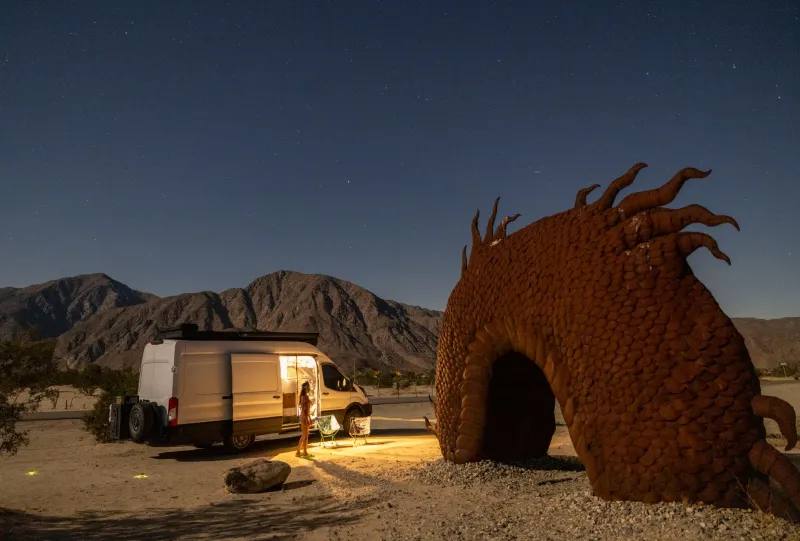
There's a moment every road rider knows. It's 2 a.m., you've been driving for six hours, the heater in your van only works on the setting that also melts your boots, and the glowing sign ahead reads TAHOE TRUCKEE EXIT — NEXT SERVICES 40 MILES. You pull in. You know the drill.
So does everyone else in the lot.
The 24-Hour Church of the Interstate
Ask any long-haul shredder where the real America lives and they won't name a city. They'll name a truck stop. The Pilot outside Rawlins, Wyoming. the Love's in Bakersfield with the legendary taqueria truck parked out back. The Sapp Bros in Nebraska where, according to multiple sources, the coffee could strip wax off a deck.
These places aren't pit stops. They're headquarters. Between 11 p.m. and 5 a.m., the parking lots fill with vans, wagons, and sedans with back seats folded flat — every one of them carrying someone chasing snow or concrete across state lines.
"You can spot a rider's rig from a hundred yards," says Marcus Delgado, 27, who's spent three winters running the I-80 corridor between Tahoe and Colorado. "Roof racks, a faint smell of grip tape and beef jerky, and somebody's sleeping bag bunched up in the front seat like a nest."
The Unwritten Rulebook
Nobody hands you a pamphlet on parking lot etiquette. You learn it the way you learn to ollie — by eating pavement a few times.
The basics, per the people who live by them:
- Park at the edge, never the middle. Truckers are working. Give them their lanes.
- Two vehicles minimum between you and the next sleeper. Privacy is currency.
- Window covers up before the lot lights time out. Nobody needs a 6 a.m. wake-up from a FedEx high-beam.
- Wave if you make eye contact. You're not friends, but you're not strangers either. You're both out here.
Delgado calls it "the nod economy." You nod at the guy brushing his teeth with a water bottle. He nods back. If one of you is broke down, the other one stops. That's the whole social contract, and apparently it holds from Reno to Reno.
Fuel for Four Dollars
Feeding yourself on the road is its own discipline. The reigning champions of cheap eats along the major corridors:
The I-80 Circuit: Delgado swears by the gas station breakfast burrito tier list, which he maintains in his phone notes. Top honors go to a Sinclar outside Elko, Nevada, that wraps theirs in a tortilla the size of a truck mudflap. Total damage: $4.29.
The I-70 Run: Riders heading from Denver toward the resorts have long known about the Waffle House-adjacent diners in the foothill towns — but the real move, says seasonal rider and part-time line cook Jess Tran, is the grocery store rotisserie chicken. "Eight bucks. That's lunch, dinner, and tomorrow's lunch. You eat it cold in the passenger seat and it's honestly better cold."
The Pacific Northwest Loop: Coffee. Always coffee. If there's a local drive-up shack with a plywood sign and a tip jar, that's where the money goes. Chains are for emergencies.
Sleeping Where the Snow Is
Trailhead camping is the nomad's rent-free apartment. The rules here are stricter, mostly because the stakes are higher — cold kills faster than a bad landlord.
The veterans all say the same things. Insulate from the ground first, not the sky. Crack a window, always, or wake up to a windshield you can't see through. And keep your boots inside the bag, because frozen boots at 6:30 a.m. is the kind of misery that ends trips.
There's a romance to it, obviously. Waking up to a parking lot dusted white, mountain in the windshield, first chair forty minutes away and zero dollars spent on lodging. But the people doing this long-term are quick to kill the fantasy.
"It's not van life," Tran says, using the Instagram phrase like it's a slur. "Van life is a filtered photo of a pour-over. This is wiping condensation off your sleeping bag with your hoodie because you forgot a towel again."
Why They Keep Driving
So why do it? Why sleep at trailheads and shower with garden hoses at rest stops when a season pass and an apartment exist?
The answers circle back to the same idea: the road is the rite of passage. Every rider you respect did a lap. They learned what their body could handle, what their rig could survive, which friends were actually friends. The trip doesn't just take you to the mountain — it sorts out who you are.
Delgado puts it simpler. "Home is wherever the van's parked and the forecast is good. Everything else is just an address."
Somewhere out there tonight, a van is idling at a Love's off I-80, windows fogged, driver half-asleep to the sound of reefer trucks. Tomorrow there's a storm system moving in and a parking lot at elevation with their name on it.
The truck stops know. They always know.